
Corfu is the northernmost of Greece’s Ionian Islands, tucked into the Adriatic just off the coasts of Albania and mainland Greece. It’s the second-largest of the Ionians, covering roughly 610 square kilometres, with a population of around 100,000 – which swells dramatically each summer as visitors arrive from across Europe and beyond.
What makes Corfu instantly different from the postcard-white Cycladic islands is its colour: this is a green island. Centuries of Venetian rule left behind an estimated three to four million olive trees, and that dense, rolling greenery is exactly why Corfu earned its “Emerald Island” nickname. Pair that with a coastline of hidden coves, dramatic cliffs and long sandy bays, and you’ve got one of the most scenically varied islands in the Mediterranean.
Corfu’s history reads like a who’s-who of European powers. The Venetians ruled for over 400 years and gave the island its elegant architecture and fortresses. The French and then the British followed – and yes, that British era is why you’ll find cricket pitches and ginger beer (tsitsibira) on a Greek island, of all places. This layered past is part of what makes a Corfu travel guide worth reading: there’s genuinely more here than beaches.
It’s also a place that’s been telling its own story for a while. Naturalist Gerald Durrell immortalised 1930s Corfu in My Family and Other Animals, later adapted into the much-loved ITV series The Durrells. Fans still come to walk in the family’s footsteps – more on that later.
Why Visit Corfu?
Corfu is worth visiting because it combines a UNESCO World Heritage old town, some of Greece’s most beautiful beaches, lush mountain scenery and a rich Venetian-British-French heritage – all on one island that’s easy to reach and suits every type of traveler. Few Greek islands offer this much variety in such a compact space.
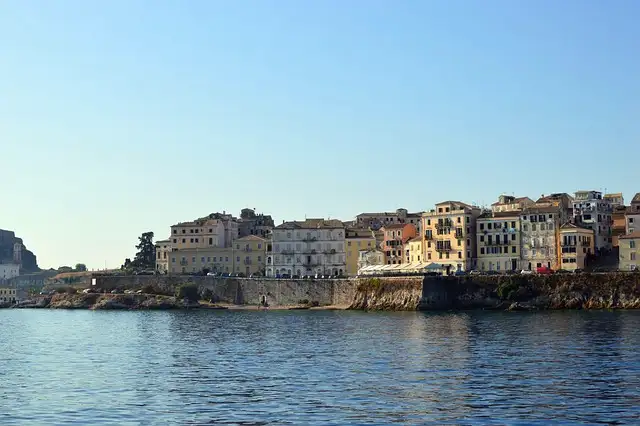
Here’s what sets Corfu apart:
- A genuine old town worth its UNESCO status. Corfu Old Town isn’t a museum piece – it’s a living, breathing maze of Venetian alleyways, French-style arcades and grand fortresses where people actually live and work.
- Beaches for every mood. From the famous Canal d’Amour rock formations to the dramatic cliffs of Paleokastritsa and quiet, family-friendly bays in the south, the variety is remarkable.
- Lush, green landscapes. Unlike the arid islands further south, Corfu is mountainous and forested – ideal for hiking, road trips and just looking out of a hire-car window in awe.
- A long, layered history. Venetian, French and British influences sit alongside ancient Greek and Byzantine heritage.
- Famously good food. Corfiot cuisine has its own distinct identity, shaped by Italian influence – think pastitsada, sofrito and bourdeto.
- It’s easy to get to. Direct flights from across the UK and Europe make Corfu one of the most accessible Greek islands for a short break.
Whether you’re after a relaxed beach holiday, a culture-rich city break, an adventurous road trip or a romantic escape, Corfu delivers. That breadth is the single best argument for choosing it.
Best Time to Visit Corfu
The best time to visit Corfu is from late May to early June and again in September, when the weather is warm (24–30°C), the sea is swimmable, crowds are thinner and prices sit well below the July–August peak. These shoulder-season windows give you the classic Corfu summer experience without the heat, hustle and inflated costs of high season.
Here’s how the seasons break down:
| Season | Months | Weather | What to expect |
|---|---|---|---|
| Spring (shoulder) | Apr–early Jun | 17–26°C, lush & green | Wildflowers, fewer crowds, lower prices, sea warming up by late May |
| Summer (peak) | Jul–Aug | 30–35°C, dry & hot | Busiest and priciest; long sunny days but packed beaches and booked-out hotels |
| Autumn (shoulder) | Sep–Oct | 24–30°C falling to ~20°C | Warm sea, golden light, thinning crowds – many travellers’ favourite window |
| Winter (low) | Nov–Mar | 10–15°C, wet | Quiet and atmospheric; many resorts and tavernas close, but flights and rooms are cheapest |
A few honest pointers from experience:
- September is the sweet spot for most people. The sea is at its warmest after a summer of heating, the relentless August crowds have eased, and accommodation typically runs 30–40% cheaper than peak.
- Late May/early June is glorious – the island is at its greenest, temperatures are comfortable for sightseeing, and you avoid the very high season entirely.
- Avoid August if you can. It’s the hottest, busiest and most expensive month, and a notorious wasp problem can make outdoor dining irritating in late summer.
- Winter is for a specific kind of traveller – someone who wants Corfu Town’s history, cosy tavernas and rock-bottom prices, and doesn’t mind that the beach resorts are shuttered.
Booking tip: For peak summer, reserve flights 2–4 months ahead and accommodation 4–6 months ahead, especially family-friendly and beachfront properties. From North America, give yourself 4–6 months for the best flight fares.
How to Get to Corfu
You can get to Corfu by air via Corfu International Airport (CFU), by ferry from mainland Greece (Igoumenitsa) or Italy, or via a short hop from neighbouring Albania. For most international travellers, flying is fastest and cheapest.
By air
Corfu International Airport “Ioannis Kapodistrias” (airport code CFU) sits just 3 km south of Corfu Town – one of the most conveniently located island airports in Greece.
- From the UK: Direct seasonal flights run from London (Gatwick, Stansted, Heathrow, Luton), Manchester, Birmingham, Bristol, Edinburgh and more, mainly April to October. Flight time is roughly 3 to 3.5 hours. Carriers include easyJet, Jet2, Ryanair, TUI and British Airways.
- From the US/international: There are no direct long-haul flights, so you’ll connect through a European hub such as London, Athens, Rome, Munich or Vienna. Athens to Corfu is a quick 50-minute domestic hop.
- Airport transfer: A taxi from CFU into Corfu Town takes about 10 minutes. Pre-booked transfers and hire cars are available, and there’s a public bus, though a taxi is the simplest option on arrival.
By ferry
- From mainland Greece: Frequent ferries cross from Igoumenitsa to Corfu in around 1 to 1.5 hours – handy if you’re driving down through Greece or combining Corfu with a mainland road trip.
- From Italy: Long-haul overnight ferries connect Venice, Ancona, Bari and Brindisi with Corfu, often en route to Igoumenitsa or Patras. Great for travellers bringing a car from Italy.
- From Albania: A short ferry from Sarandë takes roughly 30 minutes – increasingly popular for combining Corfu with a few days in Albania.
How to Get Around Corfu
The best way to get around Corfu is by hiring a car, which gives you the freedom to reach hidden beaches and mountain villages the buses don’t serve. Public buses, taxis, scooters and boat hire are all good supporting options depending on your plans.
Corfu is bigger and hillier than many visitors expect, and its best bits are spread out – so how you get around shapes your whole trip.
Option Best for Rough cost Notes Hire car Flexibility, exploring widely ~€35–60/day Best overall; book ahead in summer. Roads are winding – drive carefully Local buses (KTEL & blue buses) Budget travel, town-to-resort €1.70–€5 per trip Reliable on main routes; limited to remote spots Taxi Short hops, airport runs Metered Agree fares for longer journeys; fewer available in remote areas Scooter/quad Solo travellers, short distances ~€20–35/day Fun but use caution on mountain roads Boat hire Reaching hidden coves ~€60–120/day No licence needed for small boats; brilliant for the west coast My honest take: for anything more than a town-and-one-resort holiday, hire a car. The drive over the mountains to Paleokastritsa, the villages of the interior, and the quiet northern coves are the soul of Corfu – and they’re awkward or impossible to reach by bus. If you’d rather not drive, base yourself somewhere walkable like Corfu Town or a well-connected resort, and use buses and the occasional boat trip.
Driving note for UK/US visitors: Greece drives on the right. An International Driving Permit is recommended for non-EU licences (including post-Brexit UK drivers should check current requirements before travelling).
Where to Stay in Corfu
Corfu’s regions each have a distinct character, so where to stay in Corfu depends entirely on what kind of trip you want. Here’s how to choose your base.
Best areas at a glance
Area Best for Vibe Corfu Town (Kerkyra) Culture, couples, first-timers Historic, walkable, lively year-round Paleokastritsa Scenery, couples, families Dramatic cliffs and coves on the west coast Kassiopi & the northeast Couples, families, low-key luxury Pretty, upmarket, “Kensington-on-Sea” Acharavi & Roda (north) Families Long sandy beaches, shallow water, resorts Kavos (far south) Nightlife, young travellers Party central – loud and proud Agios Gordios & the west Beaches, couples Sandy beaches and sunsets For couples
For romance, base yourself in the northeast coast (Kassiopi, Agios Stefanos, Kalami – the “Durrell” coastline) or in Paleokastritsa for those jaw-dropping sunsets. Corfu Town is also wonderful for a couple’s city-and-sea break, with candlelit tavernas tucked into Venetian lanes.
For families
Head north. Acharavi, Roda and Sidari offer long, sandy, shallow beaches and plenty of family resorts with pools and kids’ clubs. The water is calm and the infrastructure is geared towards families.
For nightlife
Kavos in the far south is Corfu’s party capital – think bars, clubs and a young crowd. If you want nightlife with a bit more polish, Corfu Town has stylish bars and a lovely evening volta (stroll) without the full-on club scene.
For luxury
The northeast coast is where the upmarket villas and boutique hotels cluster – discreet, scenic and quietly glamorous. You’ll also find polished resorts around Dassia and Kommeno.
For budget travellers
Corfu Town has guesthouses and budget rooms, and northern resort towns like Roda and Acharavi offer good-value self-catering apartments, especially in shoulder season. Booking early and travelling in May/June or September stretches your money furthest.
Top 15 Things to Do in Corfu
There’s no shortage of things to do in Corfu – the hard part is fitting it all in. Here are the 15 experiences I’d prioritise, roughly in order of “don’t miss it”.
- Wander Corfu Old Town – Get lost in the kantounia (narrow alleys), the beating heart of any Corfu trip.
- Climb the Old Fortress – Venetian fortifications with panoramic views over town and sea.
- Visit Paleokastritsa – Six stunning coves, a clifftop monastery and some of the island’s best swimming.
- See the Achilleion Palace – The neoclassical palace built for Empress Elisabeth of Austria (“Sisi”), filled with mythology-inspired statues.
- Watch the sunset at Cape Drastis – A wild, sculptural headland in the northwest.
- Swim at Canal d’Amour, Sidari – Famous sandstone channels and rock formations.
- Take a boat trip to the blue caves – Explore Corfu’s hidden sea caves from the water.
- Explore Mon Repos – The leafy estate and museum near Corfu Town, with ancient ruins and woodland trails.
- Hike or drive up Mount Pantokrator – The island’s highest peak (906 m) with views stretching to Albania and Italy on a clear day.
- Stroll the Liston – The elegant French-built arcade where Corfiots sip coffee; pure people-watching gold.
- Visit Vlacherna Monastery & Mouse Island – The most photographed view on the island, near Kanoni.
- Wander the village of Pelekas – Hilltop views from the “Kaiser’s Throne” lookout.
- Tour an olive oil or kumquat producer – Corfu’s kumquat liqueur is a local specialty you’ll find nowhere else in Greece.
- Spend a day in the northeast coves – Kalami, Agni and Nissaki for swimming and seaside tavernas.
- Catch Greek Easter in Corfu Town – If your dates align, it’s one of the most spectacular Easter celebrations in Greece (including the famous botides pot-smashing).
The Most Beautiful Beaches in Corfu
Corfu has more than 100 beaches, and the Corfu beaches range from buzzy resort sands to remote, boat-access-only coves. Here are the standouts, grouped by what you’re after.
Best for scenery
- Paleokastritsa – Arguably Corfu’s most beautiful spot: emerald water against forested cliffs, with several small beaches to explore.
- Cape Drastis & Canal d’Amour (Sidari) – Surreal sandstone formations and turquoise channels.
- Porto Timoni – A stunning double bay reached by a short hike (or boat) near Afionas. Worth the effort.
Best for families
- Glyfada – A long sandy beach on the west coast with facilities and gentle swimming (busy in peak).
- Acharavi & Roda – Shallow, sandy and well-equipped on the north coast.
- Agios Georgios (South) – A vast, sweeping sandy bay with space to spare.
Best for quiet & swimming
- Agni, Kalami & Nissaki (northeast) – Pebbly coves with crystal water and superb tavernas.
- Rovinia – A secluded pebble cove near Paleokastritsa, often quieter than its famous neighbour.
- Myrtiotissa – A beautiful, harder-to-reach beach once called one of the loveliest in the world by Lawrence Durrell.
Best for buzz
- Kavos – Lively and youthful in the far south.
- Dassia & Ipsos – Resort beaches with watersports and a sociable atmosphere.
Tip: Corfu’s west coast has the sandy, sunset-facing beaches; the northeast coast has the pebbly, sheltered, postcard-clear coves. Plan a couple of each into your trip.
Exploring Corfu Old Town
Corfu Old Town is a UNESCO World Heritage Site and the cultural heart of the island – a remarkably preserved Venetian-era town of narrow alleys, grand fortresses, elegant squares and layered Venetian, French and British architecture. It earned its UNESCO listing in 2007 for its unique fortified urban ensemble.
This is, for me, the single best reason to visit Corfu – and a part of the island many beach-focused visitors shortchange. Give it at least a full day.
What to see in Corfu Old Town
- The Old Fortress (Palaio Frourio) – The Venetian citadel on a rocky promontory, with sweeping views and a small church.
- The New Fortress (Neo Frourio) – Slightly newer (16th century), with atmospheric tunnels and rooftop panoramas.
- The Liston – A graceful arcaded terrace built under French rule, modelled on the Rue de Rivoli in Paris. Sit, order a coffee, watch the world go by.
- Spianada Square – One of the largest squares in Europe, complete with a cricket pitch (a British leftover).
- Saint Spyridon Church – Home to the relics of the island’s patron saint; its red-domed bell tower is the tallest in Corfu.
- The kantounia – The web of narrow Venetian lanes draped with laundry and dotted with tiny shops, cafés and churches. Getting lost here is the activity.
- The Palace of St Michael and St George – A grand Regency building housing the Museum of Asian Art.
How to do it
Start early to beat the cruise-ship crowds, wander without a fixed plan, climb one fortress for the views, and settle in at a Liston café as the light goes golden. Slow is the way to experience Corfu Old Town.
Best Day Trips and Hidden Gems
Once you’ve covered the headline sights, this is where Corfu really rewards the curious. Here are the day trips and hidden gems worth building into your Corfu itinerary.
Day trips
- Paxos & Antipaxos – A boat trip to these tiny neighbouring islands delivers some of the most luminous turquoise water in Greece, plus sea caves and sleepy harbours.
- Sarandë & Butrint, Albania – A short ferry to Albania opens up the spectacular ancient ruins of Butrint, a UNESCO World Heritage Site. Bring your passport.
- The Durrell trail – Fans of The Durrells can visit Kalami (the “White House”), Danilia village and other filming and family locations.
- Mainland Greece via Igoumenitsa – Easy enough for a day trip if you fancy a change of scene.
Hidden gems
- Old Perithia – Corfu’s oldest village, half-abandoned and hauntingly beautiful, high on the slopes of Mount Pantokrator with a handful of revived tavernas.
- Angelokastro – A Byzantine clifftop castle on the west coast with extraordinary views.
- Corfu’s interior villages – Doukades, Lakones and Sinarades give you the authentic, untouristy island.
- The kumquat distilleries – A quirky, only-in-Corfu tradition worth seeking out.
These are the experiences people remember long after the beach tan fades.
Traditional Corfu Food and Drinks to Try
Corfu food is distinct from mainland Greek cuisine, shaped by centuries of Venetian influence – expect rich, slow-cooked dishes, plenty of olive oil, and unique local specialities you won’t find elsewhere in Greece. Eating here is a genuine highlight, not an afterthought.
Must-try Corfiot dishes
- Pastitsada – The island’s signature dish: meat (traditionally rooster or beef) in a spiced tomato sauce, served over thick pasta.
- Sofrito – Thin slices of veal in a white wine, garlic and parsley sauce. Comfort food, Corfu-style.
- Bourdeto – A fiery fish stew cooked with red pepper and paprika.
- Bianco – A delicate white fish dish with garlic, lemon and potatoes.
- Stifado – Slow-cooked beef or rabbit stew with sweet baby onions.
- Numbofli & local cheeses – Look out for Corfiot cheeses and rustic village fare in the interior.
Drinks to try
- Kumquat liqueur – Made from the tiny citrus fruit grown almost exclusively here. Sweet, bright and unmistakably Corfu.
- Tsitsibira (ginger beer) – A non-alcoholic legacy of British rule, still made on the island.
- Local wines – Try the rare Kakotrygis white grape grown on Corfu.
- Greek coffee on the Liston – Less a drink than a ritual. Order one and linger.
Travel tip: Eat where the locals eat – head into the villages and away from the harbour-front tourist menus for the real thing. A plate of pastitsada in a hillside taverna is one of Corfu’s great pleasures.
Suggested Corfu Itineraries
Not sure how to structure your days? Here are three ready-made Corfu itinerary templates, scalable to your trip length.
3-Day Corfu Itinerary (long weekend)
Day 1 – Corfu Town: Old Town wander, both fortresses, the Liston, Saint Spyridon Church, sunset dinner in a Venetian lane.
Day 2 – West coast highlights: Drive to Paleokastritsa for swimming and the monastery, then Lakones for the famous viewpoint and Angelokastro.
Day 3 – North coast & Sidari: Canal d’Amour, Cape Drastis at sunset, dinner in a northern village.
5-Day Corfu Itinerary
Days 1–3 as above, then:
Day 4 – Northeast coves: Kalami, Agni and Nissaki for swimming and a long taverna lunch; optional Durrell trail.
Day 5 – Achilleion & the south: Achilleion Palace, Kanoni viewpoint (Mouse Island & Vlacherna Monastery), and a southern beach.
7-Day Corfu Itinerary
Days 1–5 as above, then:
Day 6 – Boat day: Day trip to Paxos and Antipaxos for the turquoise water and sea caves.
Day 7 – Hidden Corfu: Old Perithia, Mount Pantokrator’s summit, and interior villages – or a ferry to Albania for Butrint.
Pro tip: Build in one genuinely lazy beach day. Corfu is meant to be savoured, not sprinted through.
Is Corfu Expensive?
Corfu is generally affordable by Western European and US standards, and cheaper than headline destinations like Santorini or Mykonos. A mid-range traveller can expect to spend roughly €80–€150 per person per day, while budget travellers can manage on €50–€70 and luxury trips run €250+. Your biggest cost levers are season and how you travel.
Here’s a realistic daily breakdown (per person, excluding flights):
Travel style Daily budget What it looks like Budget €50-€70 Self-catering or guesthouse, buses, taverna meals, free beaches Mid-range €80-€150 3-star hotel or apartment, hire car, restaurant dinners, a boat trip Luxury €250+ Boutique hotel/villa, fine dining, private transfers and excursions Typical individual costs:
- Accommodation: €40-€70/night (mid-range, shoulder season) up to €120–€200+ in peak summer.
- Taverna meal: €12-€20 per person for a hearty local dinner with wine.
- Coffee/drink: €2.50-€5.
- Hire car: €35-€60/day.
- Bus fare: €1.70-€5 per journey.
- Boat trip to Paxos: roughly €40–€60 per person.
How to keep costs down
- Travel in May, June, September or October rather than peak July–August.
- Self-cater part of the time – Corfu’s bakeries, markets and supermarkets are excellent value.
- Eat in the villages, not the harbour front.
- Book flights and accommodation early for peak season.
- Use buses for set routes and save the hire car for the days you’ll really explore.
So, is Corfu expensive? Not particularly – it offers real value, especially outside high season. It’s one of the more budget-friendly ways to experience a top-tier Greek island.
Essential Travel Tips and Safety Advice
A few practical Corfu travel tips to smooth your trip:
- Currency: Greece uses the Euro (€). Cards are widely accepted, but carry some cash for villages, small tavernas and beach bars.
- Language: Greek is the official language, but English is widely spoken in tourist areas. A few words of Greek (efharistó = thank you) go a long way.
- Plugs: Greece uses Type C and F plugs, 230V. UK and US visitors will need an adapter.
- Time zone: Eastern European Time (GMT+2, or GMT+3 in summer) – two hours ahead of the UK.
- Tap water: Generally safe in Corfu Town and main areas, though many visitors prefer bottled in rural spots.
- Sun protection: Summer sun is strong. Bring high-SPF sunscreen, a hat and water – and avoid midday sun in July/August.
- Driving: Roads are winding and mountainous; drive cautiously, especially at night, and watch for scooters.
- Tipping: Not obligatory, but rounding up or leaving 5–10% for good service is appreciated.
- Wasps in late summer: A known nuisance for outdoor dining in August/September – don’t leave sweet drinks unattended.
- Travel insurance: Always recommended. UK travellers should carry a GHIC (Global Health Insurance Card) alongside, not instead of, proper insurance.
- Respect local customs: Cover shoulders and knees when visiting monasteries and churches.
Is Corfu safe?
Yes – Corfu is a very safe destination with low crime levels. The main risks are practical ones: strong summer sun, winding roads, and sea conditions on exposed beaches. Use normal travel common sense, watch your belongings in busy tourist spots, and you’ll have no trouble. Solo and female travellers generally report feeling very comfortable on the island.
Frequently Asked Questions
These are the real questions travellers ask most about Corfu – including several that appear in Google’s “People Also Ask” box – answered directly.
How many days do you need in Corfu?
Most travellers find 5 to 7 days ideal for Corfu. Three days covers the essentials (Old Town, the west coast and a beach or two), but 5–7 days lets you explore the northeast coves, take a boat trip to Paxos, and discover the island’s hidden interior at a relaxed pace.
What is Corfu best known for?
Corfu is best known for its UNESCO-listed Old Town, lush green landscapes, beautiful beaches like Paleokastritsa and Canal d’Amour, and its unique blend of Venetian, French and British heritage. It’s also famous as the setting for Gerald Durrell’s My Family and Other Animals and the TV series The Durrells.
Is Corfu good for families?
Yes, Corfu is excellent for families. The north coast around Acharavi, Roda and Sidari has long, shallow, sandy beaches and plenty of family resorts with pools and kids’ clubs, while the island’s variety of activities suits all ages.
Which is the nicest part of Corfu?
The northeast coast (around Kassiopi, Kalami and Agni) is often considered the nicest part of Corfu for scenery and upmarket charm, while Paleokastritsa on the west coast is the most dramatically beautiful. Corfu Town wins for culture and atmosphere. The “nicest” part depends on whether you prioritise beaches, scenery or history.
Is Corfu better than other Greek islands?
Corfu stands out for its greenery, history and variety, making it a great choice for first-timers and families, whereas islands like Santorini and Mykonos offer iconic views and nightlife at a higher price. Corfu generally offers better value and more diverse landscapes than the famous Cycladic islands.
Can you drink the tap water in Corfu?
Tap water in Corfu Town and main tourist areas is generally considered safe to drink, though many visitors prefer bottled water, particularly in rural and mountain villages. When in doubt, stick to bottled water.
What is the best month to visit Corfu?
September is widely regarded as the best month to visit Corfu, offering warm weather (around 27°C), a sea that’s at its warmest after summer, thinner crowds than peak season, and accommodation prices roughly 30–40% lower than July and August.
How do you get around Corfu without a car?
You can get around Corfu without a car using local KTEL and blue buses, taxis, organised excursions and boat trips. Buses connect Corfu Town with the main resorts reliably, but a hire car or boat is needed to reach the island’s more remote beaches and villages.
Final Thoughts
Corfu is one of those rare places that genuinely has it all – a world-class historic town, beaches for every taste, mountain villages frozen in time, food with its own proud identity, and that unmistakable emerald-green landscape rolling down to impossibly blue water. It’s accessible enough for a long weekend yet rich enough to fill a fortnight.
If I had to leave you with one piece of advice from this Corfu travel guide, it would be this: don’t spend your whole trip on a sunlounger. Hire a car, get over the mountains to Paleokastritsa, lose an afternoon in the Old Town’s alleys, eat pastitsada in a village taverna, and watch one sunset from Cape Drastis. That’s the Corfu people fall in love with – the one that brings them back, year after year.
Wherever you base yourself and whenever you go, you’re in for something special. Καλό ταξίδι – happy travels, and enjoy the Emerald Island.