
The Philippines is one of those rare destinations that spoils you rotten on week one and then completely ruins your ability to leave. With more than 7,500 islands anchoring the archipelago, it boasts world-class wreck diving, ancient hand-carved rice terraces, active volcanoes you can summit before breakfast, and a culture so deeply hospitable that every interaction feels like catching up with an old friend.
The hard part isn’t finding something incredible to do-it’s deciding what to cut from your itinerary.
This curated tracker covers the country from north to south. It’s a mix of heavy-hitting icons, raw adventures, and the kind of slow, off-grid moments that make you forget your phone exists. Whether you’re plotting a quick two-week sprint or a two-month deep dive, these 23 experiences are worth building a route around.
1. Island Hop the Limestone Labyrinths of El Nido, Palawan
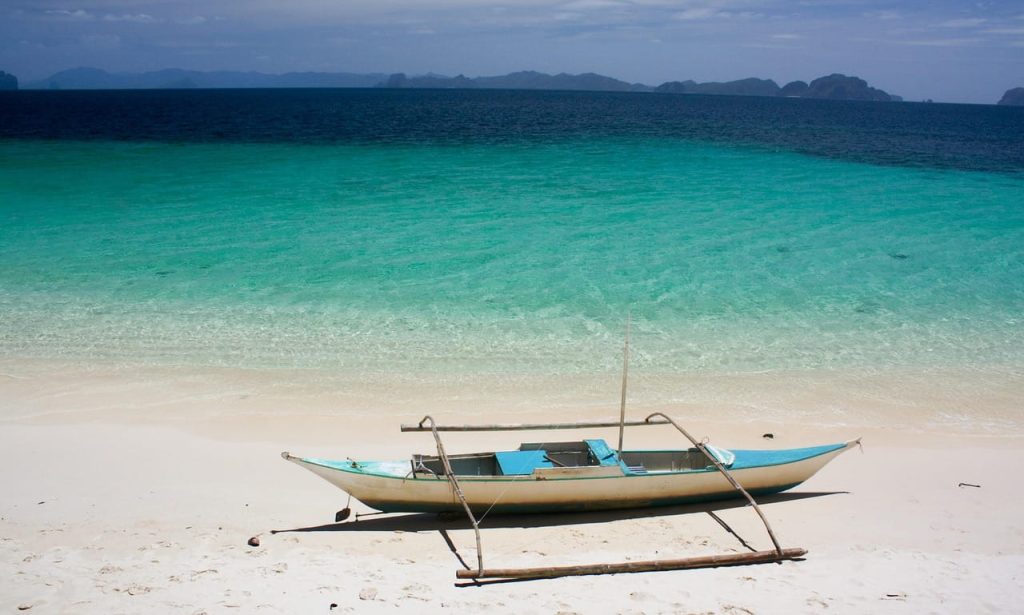
El Nido is the reason people pack up their lives and move to Southeast Asia. Towering jagged limestone karsts rise sheer out of neon-turquoise water, hiding secret lagoons so clear your boat’s shadow looks like it’s floating in mid-air.
While the beachfront town at the northern tip of Palawan is a bit of a chaotic backpacker hub, it serves as the ultimate launchpad for the famous island-hopping routes.
- The Route Guide: Local operators standardize trips into Tours A, B, C, and D. Tour A (Big Lagoon) and Tour C (Secret Beach and Helicopter Island) are the absolute non-negotiables for a first trip.
- Blogger Pro-Tip: Do not book standard group tours if your budget allows. Hire a private bangka (outrigger boat) with a couple of friends, leave the dock at 7:00 AM-an hour before the armada of group tours-and get the world’s best lagoons entirely to yourself.
2. Navigate the Puerto Princesa Underground River
As a UNESCO World Heritage site and one of the New 7 Wonders of Nature, this massive subterranean river snakes over eight kilometers through a limestone mountain cave system before draining directly into the South China Sea.
You explore the lower portion via a low-profile paddle boat, wearing a hard hat while dodging low-hanging stalactites and listening to thousands of bats flutter through cavernous chambers wide enough to swallow a cathedral.
- Logistics: Environmental caps strictly limit daily visitor numbers. If you’re staying in Puerto Princesa town, book your permits at least a few weeks out through a reputable agency to avoid arriving at Sabang beach only to be turned away.
3. Catch a Legendary Sunset from White Beach, Boracay
Boracay’s famous four-kilometer strip of powdery white sand has gone through massive environmental overhauls in recent years, and the eco-forward regulations paid off. The beach is cleaner, single-use plastics are strictly banned on the shoreline, and the water is as pristine as it was decades ago.
- Choosing Your Base: The beach is split into three “Stations.” Station 2 is the frantic, high-energy heart of the island packed with beach bars and live acoustic sets. Station 3 to the south is where you go when you want to read a book in peace under a palm tree while holding an ice-cold mango shake.
4. Stand Before the Chocolate Hills of Bohol
Bohol is packed with Spanish-era stone churches and lazy jungle rivers, but the Chocolate Hills look like a landscape sketched by a surrealist painter. Spread across 50 square kilometers are more than 1,200 perfectly symmetrical, cone-shaped hills that turn a deep, dusty cocoa brown toward the tail end of the dry season.
- When to Go: March through May guarantees that iconic “chocolate” look. For the best view, bypass the midday heat and head to the Carmen viewing platform at sunrise when the mist still sits thick in the valleys between the mounds.
5. Meet the Highly Sensitive Philippine Tarsier
No animal in the country commands a crowd quite like the tarsier. These miniature, nocturnal primates are barely bigger than a tennis ball, sporting massive forward-facing eyes that are completely fused to their skulls-forcing them to rotate their heads 180 degrees like tiny owls just to check their surroundings.
- Ethical Travel Note: Tarsiers are highly prone to stress-induced self-harm when exposed to loud environments. Skip the roadside tourist traps along the main highway and head exclusively to the Philippine Tarsier Sanctuary in Corella. It’s a semi-wild forest where rangers quietly guide you along boardwalks to see them resting naturally in the canopy. Keep your camera flash off and your voice to a whisper.
6. Surf Cloud 9 (and Feel the Soul) of Siargao
Siargao originally put itself on the map because of a single, thunderous wave: Cloud 9. It’s a heavy, hollow right-hand reef break that pulls in pro surfers from every corner of the planet.
However, Siargao has completely transformed into the country’s capital of laid-back lifestyle travel. The island is now an epicenter for boutique hostels, incredible farm-to-table restaurants, and day trips to the jaw-dropping emerald pools of Sugba Lagoon. Even if you never touch a surfboard, you will likely fall victim to the “Siargao extension”-where you cancel your flights home to stay another month.
- Prime Season: August to November yields the most consistent swell for advanced riders. Beginners can find gentle whitewater breaks in the protected coves year-round.
7. Dive the Haunting WWII Japanese Wrecks of Coron
Coron is widely considered a holy grail for wreck diving, and the treasure sits at the bottom of a dramatic, current-swept bay. In September 1944, a surprise US airstrike caught a fleet of Japanese supply ships at anchor. Today, those massive vessels rest on the seabed, completely encrusted in soft corals and serving as thriving artificial reefs.
- The Experience: Ships like the Okikawa Maru and the Irako offer mind-bending penetration routes for advanced divers who want to swim through old boiler rooms and cargo holds. If you’re a non-diver, you can still snorkel over the Skeleton Wreck, where the superstructure sits just a few meters below the surface.
8. Trek the Ancient Amphitheaters of Banaue & Batad
Long before modern machinery, the indigenous Ifugao people used hand tools to sculpt the mountains of Cordillera into cascading steps of mud and stone. Often called the “Eighth Wonder of the World,” these 2,000-year-old rice terraces reach altitudes of up to 1,500 meters, fed by an ingenious ancient irrigation network that channels water from the mossy rainforests above.
[Banaue Town] ── (Trike/Jeepney) ──> [Saddle Drop-off] ── (45-Min Hike) ──> [Batad Amphitheater]
- The Real Gem: While the terraces in Banaue proper are visible right from the main road, pack your hiking boots and take a rugged local transport to Batad. This village sits hidden in a massive, cliff-locked basin shaped like a Greek amphitheater. Spending a night in a traditional Ifugao hut with zero cellular service is a core Philippine memory.
The Ultimate Guide to Christmas in the Philippines
9. Choose the Ethical Whale Shark Experience in Donsol
Getting into the water alongside a creature the size of a school bus is an unforgettable experience, but where you do it matters immensely.
While Oslob in Cebu offers a guaranteed, 100% success rate because fishermen artificially feed the sharks every morning, it disrupts natural migration patterns and leads to skin lesions from boats. For an authentic, wild, and completely ethical encounter, head instead to Donsol in Sorsogon. Here, you board a boat with a local spotter, scout the bay for wild sharks feeding naturally on plankton, and slide into the water to swim alongside them on their terms.
- Seasonality: The Donsol season runs strictly from November to June, peaking between February and April.
10. Summit Mount Pulag and Stand Above a Sea of Clouds
At 2,922 meters, Mount Pulag is the roof of Luzon. The draw here isn’t just checking a peak off your list; it’s the mystical “sea of clouds” that blankets the surrounding valleys at dawn, leaving the grassy summit feeling like a solitary island floating in a white ocean.
- The Route: The Ambangeg Trail is the most accessible and heavily traveled track-a relatively gentle 3-to-4-hour hike through mossy pine forests that anyone with decent cardio can handle. Make sure to pack heavy winter gear; temperatures near the summit frequently drop close to freezing before sunrise.
11. Walk the Spanish-Era Bastions of Intramuros, Manila
If you think Manila is nothing but modern shopping malls and bumper-to-bumper traffic, you haven’t stepped inside the “Walled City.” Built by Spanish colonizers in the late 16th century, Intramuros is a historic grid of cobblestone streets, heavy stone fortifications, and hidden courtyards that survived centuries of siege.
- What to See: Explore Fort Santiago, the military prison where national hero José Rizal spent his final nights, and San Agustin Church, a breathtaking Baroque masterpiece that stands as the oldest stone church in the country. The best way to see it is by renting a locally crafted bamboo bike (Bambike) and cruising the ramparts during the golden hour.
12. Canyoneer Through the Electric Blue Waters of Kawasan Falls
This isn’t a casual nature walk-it’s a high-adrenaline scramble down a limestone river canyon in southwestern Cebu. Equipped with a helmet, life vest, and a local guide, you will spend four hours jumping off cliffs ranging from 3 to 12 meters, sliding down natural rock chutes, and swimming through tight, jungle-framed gorges.
- The Finish Line: The route deposits you directly at the main pools of Kawasan Falls, famous for its hyper-saturated, milky turquoise water. Go early in the morning to beat the massive day-tripper crowds arriving from Cebu City.
13. Cruise the Jungles of the Loboc River
The Loboc River cuts a deep, emerald-green path right through the heart of Bohol’s dense palm jungle. The classic way to experience it is via a floating restaurant boat that glides upstream while you enjoy a traditional Filipino buffet and listen to acoustic musicians.
- The Alternative Route: If the large buffet boats feel a bit too commercial for your style, head upriver to hire a stand-up paddleboard (SUP) or a kayak. It allows you to explore the quiet mangrove offshoots and isolated swimming holes completely at your own pace.
14. Step Back in Time Along Calle Crisologo, Vigan
Vigan is a remarkably preserved Spanish colonial trading town in northern Luzon, where horse-drawn carriages (calesas) still clatter over old cobblestones. The crown jewel is Calle Crisologo, a pedestrian-only lane lined with 18th-century merchant mansions featuring thick brick walls, high-pitched roofs, and classic capiz-shell windows.
- The Blogger Secret: Walk Calle Crisologo at 5:30 AM. The air is cool, the heavy wooden doors of the antique shops are still locked, and the yellow glow of the streetlamps cutting through the morning mist makes you feel like you’ve stepped directly into the 1700s.
15. Snorkel the Mind-Boggling Sardine Run in Moalboal
You don’t need a boat, a costly tour, or even a scuba tank to witness one of the planet’s greatest marine spectacles. Just a few meters off the shore of Panagsama Beach in Moalboal, the reef drops off into a deep blue wall-and that is where the sardines live.
- The Experience: Millions of sardines form a permanent, swirling, shape-shifting baitball that reacts like a single living organism. As you swim through it with a basic snorkel, the school parts around you, catching the morning sunbeams like shimmering silver armor. Because the drop-off is so close to the beach, it’s completely free and accessible year-round.
16. Gaze at the Flawless Symmetry of Mayon Volcano
Rising 2,463 meters above the plains of Albay in the Bicol region, Mayon is celebrated globally as the world’s most perfectly symmetrical stratovolcano. Its stark, mathematical cone is a mesmerizing sight, often wearing a delicate ring of cloud around its active peak.
- Best Vantage Point: Head to the Cagsawa Ruins, where the stone belfry of a 17th-century Franciscan church rises out of the earth-the sole survivor of a catastrophic 1814 eruption. Seeing that black spire framed against the green, sloping canvas of Mayon is the definitive shot of eastern Luzon.
17. Dive Deep Into the Chaos of the Sinulog Festival
Every third Sunday of January, Cebu City explodes into a colorful celebration of music, rhythm, and faith. Sinulog is the granddaddy of Filipino cultural festivals, drawing over a million revelers into the streets for a massive, multi-mile parade.
- What to Expect: Drummers provide a non-stop, hypnotic two-step beat while dance troupes in kaleidoscope-colored costumes perform ancestral routines in honor of the Santo Niño (Child Jesus).
- Blogger Survival Tip: This is a high-energy street party. Wear old clothes, protect your phone in a waterproof pouch (expect to be hit with water guns and face paint), and secure your accommodation in Cebu City months in advance.
18. Thaw Out in the Saltwater Pools of Maquinit Hot Springs
Most hot springs are tucked deep into alpine forests, but Maquinit-located just outside Coron town on Busuanga Island-is one of the rare therapeutic saltwater hot springs on earth. Fed by an underground volcano, the geothermal water bubbles up into tiered stone pools right at the edge of a coastal mangrove forest.
- When to Go: It’s a spectacular place to wind down after a long day of diving or hiking up Mount Tapyas. Hit the pools just as dusk settles; the water sits around a therapeutic 39°C (102°F), and you can watch the sky turn deep purple through the mangrove trees.
19. Decode the Ancient Hanging Coffins of Sagada
High in the misty, pine-covered Cordillera mountains sits the isolated town of Sagada. For over two millennia, the indigenous Kankana-ey people have practiced a unique funerary rite: instead of burying their dead underground, they secure the deceased inside handmade wooden coffins nailed or wedged high up onto the faces of limestone cliffs.
[Cliff Face]
   ├── [High Coffin] -> Closer to ancestral spirits
   ├── [Mid Coffin]  -> Protected from wild animals
   └── [Valley Floor]
- The Cultural Context: The local belief dictates that placing the coffins higher up brings the spirits of the departed closer to their ancestral gods. You can hike down into Echo Valley with a mandatory local guide to view these cliff-side structures respectfully from below.
20. Escape the Crowds at Diniwid Beach, Boracay
If the bustling commercial energy of Boracay’s main White Beach starts wearing you thin, take a short stroll northward along the carved cliffside path. You will pop out at Diniwid Beach, a tiny, cliff-locked cove that feels like a private island hideaway.
- The Vibe: The water is the exact same powdery turquoise as the main stations, but the footprint is a fraction of the size. Find a spot on the sand or grab a drink at a cliffside lounge built straight into the rock face to watch the outrigger boats cruise past.
21. Commute Like a Local in a Manila Jeepney
The Jeepney is the undisputed king of the Philippine road. Originally cobbled together from surplus US military jeeps left behind after World War II, these extended passenger vehicles are rolling art pieces-decked out in chrome hood ornaments, hand-painted religious murals, neon LED arrays, and personalized family crests.
- How to Ride: It’s loud, crowded, and slightly chaotic, but it is a vital slice of urban Filipino life. Look for the destinations painted directly onto the side panels or cardboard signs in the windshield. Once inside, yell “Bayad po” and pass your coins down the row of passengers; it will find its way to the driver seamlessly through the crowd.
22. Embark on a Culinary Tour of a Local Public Market
Filipino food is an incredible, sour-forward fusion of indigenous, Spanish, and Chinese influences, and the best place to understand it is at a bustling public market rather than a manicured restaurant. Find a local market stall and look for these five staples:
| Dish | What It Is | Where to Track It Down |
| Lechon | Whole slow-roasted pig with shatteringly crisp skin and tender, lemongrass-infused meat. | Cebu (The gold standard) |
| Sisig | Finely chopped pork face and ears, seasoned with calamansi and chili, served sizzling on a cast-iron plate. | Pampanga (The birthplace) |
| Kare-Kare | A rich, savory stew of oxtail and vegetables simmered in a thick, un-sweetened peanut sauce. | Everywhere (Pair with bagoong / shrimp paste) |
| Halo-Halo | A wild dessert of shaved ice, condensed milk, purple yam (ube), leche flan, and sweet beans. | Everywhere (The ultimate summer cooler) |
| Balut | A fertilized, savory duck egg boiled and eaten hot directly from the shell with a pinch of rock salt. | Street corners (Sold exclusively after dusk) |
23. Cast Away to an Off-Grid Private Island Near Port Barton
Palawan is packed with ultra-luxury private island resorts, but you don’t need a corporate bank account to get a slice of isolated island life. Head to the quiet, sleepy fishing village of Port Barton on the Palawan mainland.
Unlike its more famous neighbor El Nido, Port Barton moves at a snail’s pace. From the main beach, you can charter a local fisherman to drop you off at one of the tiny, undeveloped islands dotting the bay-like Exotic Island or German Island-where simple eco-cottages or beach tents let you wake up with the tide and snorkel straight off the sand without a soul in sight.
The Practical Playbook for Your Trip
- The Weather Windows: The country has two defining seasons: Dry (November to May) and Wet (June to October). The absolute sweet spot for clear skies and smooth ferry crossings is between December and April.
- Navigating the Islands: The quickest way to hop between major island hubs is by air. Domestic carriers like Cebu Pacific and Philippine Airlines operate extensive, affordable networks out of Manila and Cebu. For shorter hops (like Cebu to Bohol or Coron to El Nido), high-speed passenger ferries are your go-to.
- Money Matters: The currency is the Philippine Peso (PHP). While major hubs like Manila, Cebu, and Boracay are completely card-friendly, the country runs on paper money. Always carry plenty of small-denomination cash bills when heading to places like Siargao, Sagada, or Port Barton-ATM outages are common, and remote vendors do not take plastic.
- The Communication Factor: English is an official language here and is spoken with incredible fluency across almost all provinces. You will find that navigating bus schedules, reading menus, and asking for directions is seamless.